
Many businesses believe cyber insurance is their safety net.
And it can help — financially.
But what many organizations don’t realize is this:
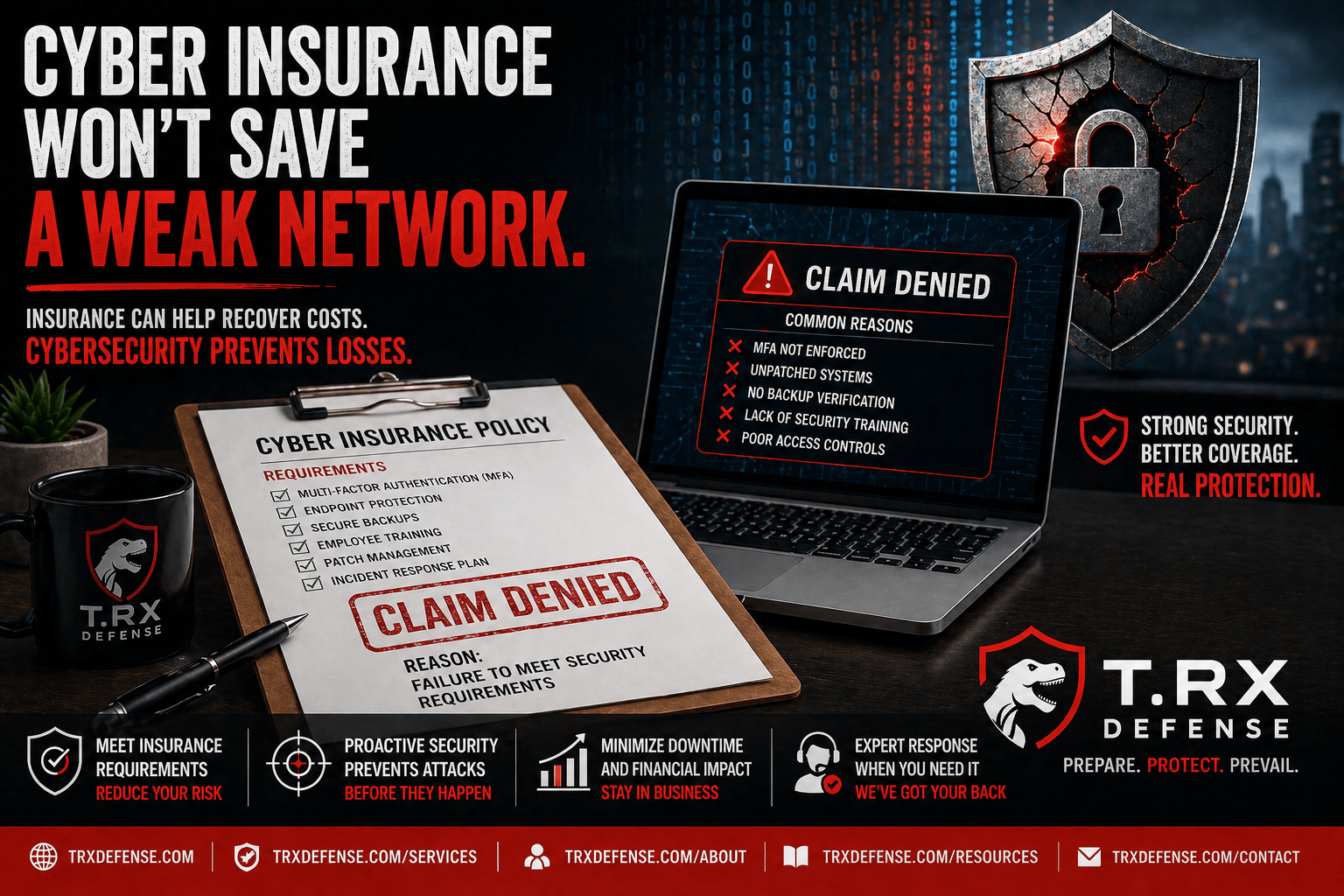
Cyber insurance providers are becoming far more aggressive about denying claims when businesses fail to maintain basic cybersecurity protections.
In other words:
If your security is weak, your coverage may not protect you the way you think it will.
At T.RX Defense, we help businesses strengthen cybersecurity posture while preparing for the evolving requirements tied to cyber liability coverage.
Cyber Insurance Requirements Are Changing Fast
A few years ago, obtaining cyber insurance was relatively simple.
Today, providers often require businesses to prove they have:
- Multi-factor authentication (MFA)
- Endpoint protection
- Secure backups
- Employee cybersecurity training
- Incident response plans
- Access controls
- Regular patch management
Why?
Because ransomware attacks and business email compromise scams continue costing insurers billions annually.
According to IBM’s Cost of a Data Breach Report, cyber incidents remain one of the most expensive operational risks businesses face.
Insurance companies are responding by tightening standards significantly.
Some Businesses Learn Too Late
One of the harsh realities of modern cyber insurance is that providers may investigate whether businesses followed their own security policies after an incident occurs.
If a company claims to have protections in place — but:
- MFA wasn’t enforced
- Systems weren’t patched
- Employees ignored procedures
- Backups failed
- Security controls were bypassed
…claims can become far more complicated.
Cyber insurance helps manage risk.
It does not replace cybersecurity.
Compliance Doesn’t Equal Security
Another dangerous misconception:
Passing a cybersecurity checklist does not automatically make a business secure.
Many organizations focus on “checking boxes” instead of building strong operational security habits.
Attackers don’t care whether:
- Policies exist on paper
- Training slides were completed
- Insurance forms were submitted
They care about weaknesses they can exploit.
Real cybersecurity requires:
- Consistency
- Monitoring
- Employee awareness
- Proactive defense
- Fast incident response
Explore proactive cybersecurity services here:
https://trxdefense.com/services
The Best Defense Is Preparation
The businesses best positioned to survive cyber incidents are usually the ones that prepared before something happened.
That preparation includes:
- Security assessments
- Employee training
- Access management
- Backup testing
- Threat monitoring
- Incident response planning
Cyber insurance should support cybersecurity strategy — not replace it.
Find additional cybersecurity resources here:
https://trxdefense.com/resources
Cybersecurity Is Becoming a Business Requirement
Today, cybersecurity affects:
- Insurance eligibility
- Vendor relationships
- Compliance requirements
- Customer trust
- Financial stability
Businesses that ignore cybersecurity increasingly face operational and financial consequences far beyond IT problems.
At T.RX Defense, we help businesses improve resilience through practical cybersecurity strategies, managed security services, employee awareness, and risk assessments designed for modern threats.
Don’t Wait Until a Claim Gets Denied
Cyber insurance matters.
But strong cybersecurity matters more.
The businesses that recover fastest — and avoid the biggest losses — are the ones investing in preparation before disaster strikes.
Ready to strengthen your cybersecurity posture?
- Main Site: https://trxdefense.com
- Services: https://trxdefense.com/services
- Resources: https://trxdefense.com/resources
- Contact T.RX Defense: https://trxdefense.com/contact
T.RX Defense — Prepare. Protect. Prevail.