
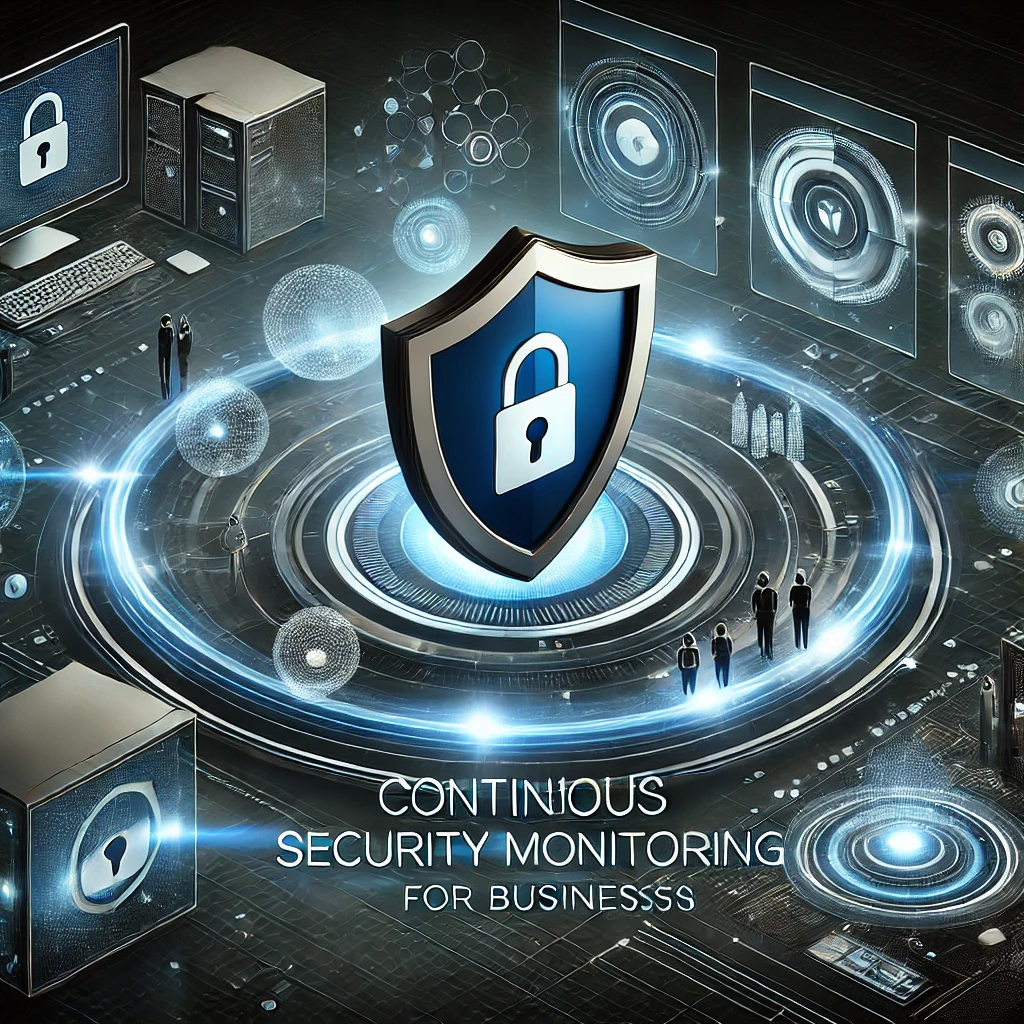
In today’s ever-evolving cybersecurity landscape, businesses face a constant barrage of threats that can compromise their operations, data, and reputation. Cyberattacks are no longer rare, isolated incidents; they are increasingly common, and the techniques used by attackers are becoming more sophisticated. This is why continuous security monitoring is no longer just an option—it’s a necessity.
Continuous security monitoring involves the ongoing surveillance of a business’s digital infrastructure to detect, prevent, and respond to potential security threats in real-time. Unlike periodic security assessments, continuous monitoring ensures that your security measures are always active, giving you the ability to respond to threats before they escalate into serious breaches.
1. Real-Time Threat Detection
The biggest advantage of continuous security monitoring is the ability to detect threats in real-time. Cyberattacks can occur at any time, and they often target vulnerabilities that businesses may not even be aware of. A study by Ponemon Institute found that it takes an average of 287 days to identify and contain a data breach [https://www.ibm.com/security/data-breach]. This means that without real-time monitoring, a breach could go undetected for months, causing extensive damage to your business.
With continuous monitoring, businesses can immediately identify suspicious activity, such as unauthorized access attempts or unusual network traffic. This allows for a quick response, minimizing the impact of the attack and reducing the likelihood of data loss or operational disruptions.
2. Mitigating the Damage of Cyber Attacks
Cyberattacks are inevitable in today’s digital environment, but how quickly you respond to them can make all the difference. Continuous security monitoring provides businesses with the ability to respond to incidents as they happen, significantly mitigating the damage. The longer a cyberattack goes undetected, the more damage it can cause. For example, ransomware attacks can encrypt entire networks in a matter of hours, locking businesses out of critical data and systems.
According to a report by CrowdStrike, the average “breakout time” for attackers to move from an initial compromise to other systems is less than 30 minutes [https://www.crowdstrike.com/resources/reports/global-threat-report/]. This means that even a short delay in detecting and responding to an attack can lead to devastating consequences. Continuous monitoring ensures that businesses can react immediately to stop attackers in their tracks.
3. Proactive Vulnerability Management
One of the key elements of continuous security monitoring is vulnerability management. This involves constantly scanning your systems for vulnerabilities, misconfigurations, or outdated software that could be exploited by attackers. Proactively addressing these vulnerabilities is essential for maintaining a strong security posture.
For example, the infamous Equifax breach in 2017 was caused by a known vulnerability in their software that had not been patched. This vulnerability allowed attackers to access the personal information of over 147 million people [https://www.ftc.gov/news-events/press-releases/2019/07/ftc-equifax-data-breach-settlement]. Continuous monitoring helps prevent such incidents by identifying and addressing vulnerabilities before they can be exploited.
At T.RX Defense, we offer Managed Security Services that include proactive vulnerability management to ensure that your business stays ahead of potential threats.
4. Enhanced Compliance and Reporting
For businesses operating in regulated industries, continuous security monitoring is crucial for maintaining compliance with data protection regulations such as GDPR, HIPAA, or CCPA. Many of these regulations require businesses to implement continuous monitoring and reporting to ensure that data is adequately protected.
Additionally, continuous monitoring simplifies the process of generating compliance reports, as all security events are logged and recorded in real-time. This ensures that businesses can demonstrate their compliance efforts during audits and inspections.
5. Building Trust with Clients and Partners
In the modern business environment, security is not just an internal concern—it’s also a key factor in building trust with clients and partners. Data breaches can have a devastating impact on a company’s reputation, leading to lost business and damaged relationships. According to a study by KPMG, 68% of consumers would lose trust in a company following a data breach, and 40% would stop using the company’s services altogether [https://home.kpmg/xx/en/home/media/press-releases/2017/01/kpmg-survey-shows-data-breaches-cause-customers-to-flee.html].
Continuous security monitoring demonstrates your commitment to protecting sensitive data, giving your clients and partners confidence that you take cybersecurity seriously. This can be a competitive advantage in industries where data protection is a top priority.
6. The Role of AI and Automation in Continuous Monitoring
As cyber threats become more sophisticated, the role of artificial intelligence (AI) and automation in continuous security monitoring has become increasingly important. AI-driven monitoring tools can analyze vast amounts of data in real-time, identifying patterns and anomalies that may indicate a security threat. This allows businesses to detect and respond to threats faster than ever before.
Automation also plays a critical role in reducing the workload on security teams, enabling them to focus on more strategic initiatives. Automated systems can handle routine monitoring tasks, such as scanning for vulnerabilities or applying patches, ensuring that your security measures are always up-to-date.
At T.RX Defense, our Managed Security Services leverage the power of AI and automation to provide continuous security monitoring that adapts to the ever-changing threat landscape.
Conclusion: Don’t Wait for a Breach
In a world where cyber threats are constantly evolving, businesses cannot afford to take a reactive approach to cybersecurity. Continuous security monitoring is essential for detecting and responding to threats in real-time, mitigating the damage of cyberattacks, and ensuring compliance with industry regulations.
At T.RX Defense, we help businesses Prepare, Protect, and Prevail with comprehensive security solutions that include continuous monitoring. Ready to take your security to the next level? Contact us today to learn more about how our managed security services can keep your business safe.